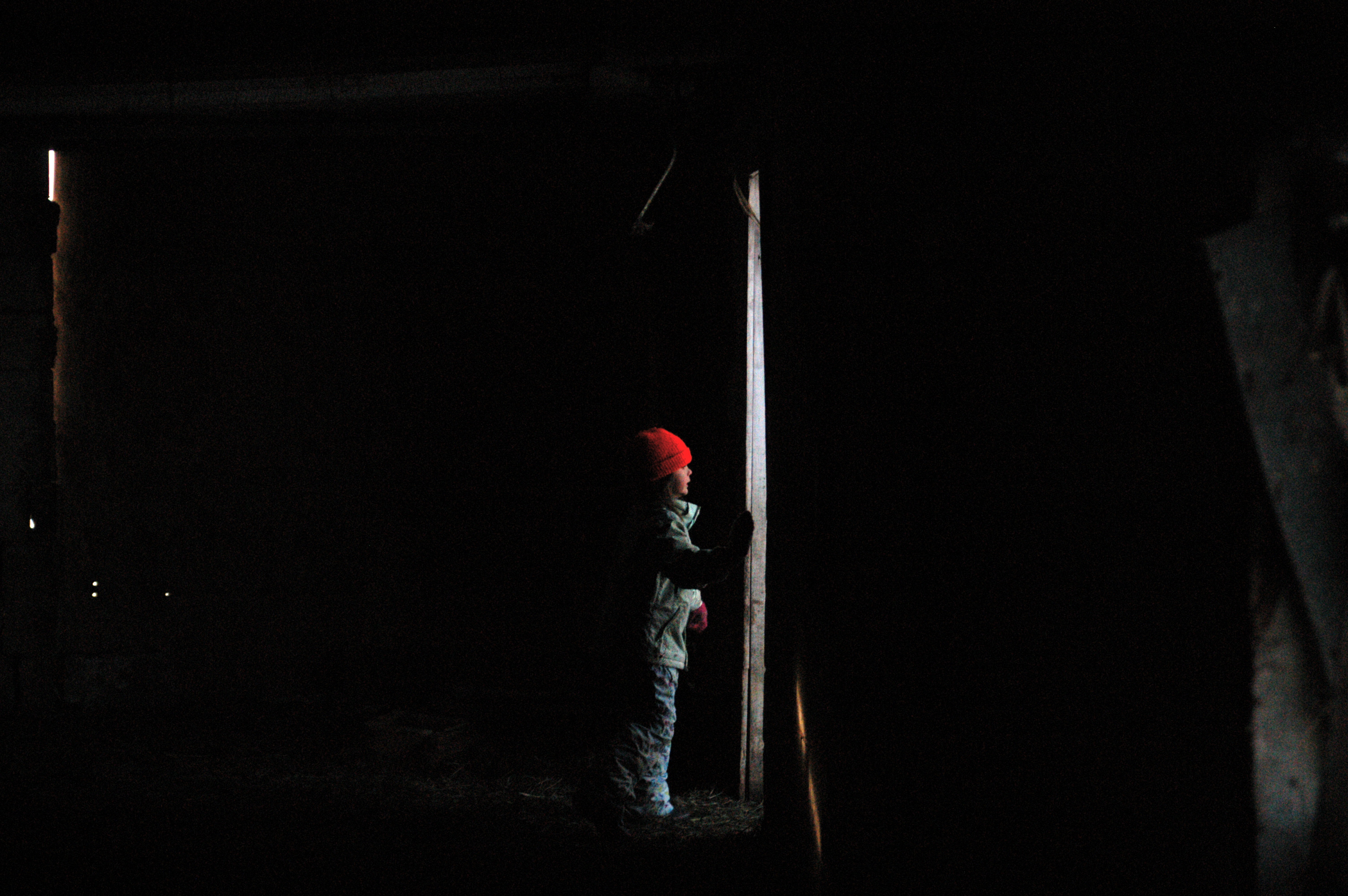
Woodsmoke and steam.

Cooking maple sap. | Clean.

Cooking maple sap. | Clean.


Cooking maple sap. | Clean.

Cooking maple sap. | Clean.

Cooking maple sap. | Clean.

Cooking maple sap. | Clean.

Cooking maple sap. | Clean.

Cooking maple sap. | Clean.

Cooking maple sap. | Clean.

Cooking maple sap. | Clean.


Cooking maple sap. | Clean.

Cooking maple sap. | Clean.

Cooking maple sap. | Clean.

Cooking maple sap. | Clean.

Cooking maple sap. | Clean.

Randomly, spontaneously, we decided to cook down the many gallons of maple sap that we've collected in the past few days. We've been cooking it slowly as we go (on the kitchen stove of all places) but Pete and Sage build a simple maple cooker out of a dozen cinder blocks today.

So we went for it.

We started cooking mid-afternoon, and the next thing I knew we had spent the day outside in the sunshine around the fire.

Not too shabby for a random Wednesday.

When we got hungry we had a perfectly balanced meal of hot maple sap, organic hot dogs, and last year's dilly beans from the cellar. (Yes, some days not going in to cook trumps a healthy meal.)

There was music, laughter, books, woodsmoke, and steam.

And then it was time to call it a night.

Long after bedtime might have been we wandered inside for warmed raw milk with ghee (to help little ones sleep and fill any empty spots left in tummies after our questionable dinner). Then – still laughing – everyone tucked in for the night.

Spring in the country. Maple sap. Woodsmoke. Steam. Bald eagles. Sandhill cranes. Music. Handknits. Magic. Stars. Peace.

More goodness than my heart can hold.

It’s almost time.

Sheep. | Clean. : : the LuSa Organics Blog

When I was in my 20s anytime we would drive past a sheep
farm I would squeal, "Sheeeeeeeepppp!" and press my face to the car
window. Pete would just shake his head looking sensible and wearing a "tsk, tsk"
expression. (Or alternately the "Come-on-baby-you-can't-be-serious" face.)

He knew.

It wasn't time.

But there was something I knew, too: that someday it would be time.

Sheep. | Clean. : : the LuSa Organics Blog

Sheep. | Clean. : : the LuSa Organics Blog

But oh, how I wanted them. Right then. Right away. How could I possibly wait?

That was almost 20 years ago.

A
local friend heard I was getting sheep and asked me why. "Cattle are so
much easier. If you need meat there are better ways to get it than by
keeping sheep. I mean, I know they give wool and all but really. You
don't want sheep."

Actually, I do. I really really do.

Cattle? No thanks. No cows for me. Not now anyway.


Sheep. | Clean. : : the LuSa Organics Blog

Looking back to this decades-long desire, I'm not sure what the appeal was originally. It wasn't practical, I'll tell you that. (Seeing that I was a non-knitting vegetarian at the time.)

It must have been their peaceful, gentle beauty. Because really, that's just about enough.

And now I'm almost 40. It's been almost half of my life since I fell in love with sheep.

And for my 40th birthday present next month I'm buying myself sheep. My first ever small flock of sheep.

And this time Pete is on board.

Sheep. | Clean. : : the LuSa Organics Blog

Sheep. | Clean. : : the LuSa Organics Blog

Oh my goodness. These sheep. They have run off with my heart, that much I know.

We're starting with just two ewes and their babies, plus two other ewes without young. Most are coming from our friend Kathryn who happens to own our fabulous local yarn shop.

The ewes and their lambs that will come home with us are pictured below. 

Sheep. | Clean. : : the LuSa Organics Blog

Sheep. | Clean. : : the LuSa Organics Blog

Sheep. | Clean. : : the LuSa Organics Blog

Sheep. | Clean. : : the LuSa Organics Blog

Sheep. | Clean. : : the LuSa Organics Blog

Oh, yes.

And now when I squeal "Sheeeeeep!" as we pass by a farm, Pete just smiles and shakes his head a little. Not because it isn't time, but more because I'm a dork. 

Because yes. Finally -  it is time.

How to tap a maple tree.

How to tap a maple tree. | Clean.

How to tap a maple tree. | Clean.

How to tap a maple tree. | Clean.

How to tap a maple tree. | Clean.

How to tap a maple tree. | Clean.

Oh, yes. It's that time again.

While the snow is still on the ground but the days have started to warm, the maple sap begins to rise. 

And we tap.

Somehow every year it feels like hope becomes somthing tangible and real in the form of the steady drip-drip-drip of sap into bucket.

"Yes. Spring will come again," it says.

And every year it does.

This year we're just tapping a few trees close to our house. This summer we'll mark lots more maples in our woods and build a simple maple sap cooker. But for now we're going easy and slow.

In my life-before-motherhood-and-LuSa I was a naturalist. In that role I've tapped lots of maple trees with lots of school groups. It's easy, educational, and ridiculously rewarding. And so we've also done it as a family almost every year since before Sage was born.

If you haven't made maple syrup with your family I urge you give it a go! Even in town you can surely find a tree or two to tap on your own property or with a friendly neighbor. (In Viroqua we tapped a friends' tree with the agreement to share the syrup we produced.)

If you're new to maple tapping or just need a refresher, here is how to do it. Really it's as simple as: drill, tap, collect, and cook. But I've explained it in more detail below! (A few handy afflinks follow.)

Edited in 2018 to add: If you'd love an expanded print-version, of my maple tapping instructions, you can find it in Taproot Magazine, issue 25:HEARTH. I've included even more details, plus a few of my favorite recipes for your syrup.

How to Tap a Maple Tree

How to tap a maple tree. | Clean.

1. Gather supplies

All you need is a spile (or tap), a hammer, drill with appropriate bit, and a bucket and lid. And a tree, of course. But we'll get to that in a moment.

In years past we modified random buckets by cutting a hole in the side and adding a loop of wire to suspend it from the spile. This year we bought proper maple pails, found locally and made by these folks in Canada. 

Either option works. Ideally you will have a lid to keep out bits of bark and leaves, but this, too, can be improvised.

How to tap a maple tree. | Clean.

2. Find your tree

Sugar maples are best but in a pinch we've even tapped our birch trees, a Norway maple, and a silver maple. Sugar maple have the most sugar of all, but the others still make great syrup. (Surprising but true!)

You will, of course, need some basic skills in tree identification. If this isn't your forte ask a competent friend to help, visit a local nature center for assistance (bring in a branch from your tree if you wish), or get a simple tree ID book like this winter tree field guide from your library. Or use this fabulously simple on-line key in the summer and mark your tree for next year.

Maples are – in my opinion – one of the easiest deciduous trees to identify in any season because of their opposite branching, but if you're unsure get help! 

3. Timing

To tap your trees, first pick the right time of year. Tap in late winter/early spring when the daytime temperatures are above freezing but the nights are still cold. This is when the sap begins to rise and is the only time to capture a bit for yourself. (Here in Western Wisconsin that's usually late February or early March.)

How to tap a maple tree. | Clean.

4. Tap

Tap by choosing a drill bit the same diameter or a smidge narrower than your spile near the widest part before the hook. (Usually 5/16" or 7/16".) Drill a hole at chest height on the south (sunny) side of the tree at a slight angle downward from the trunk. (Your bit will be angled upward just a touch.)

Drill to the depth required for your spile. You can mark that spot on your drill with a piece of masking tape if you wish.

Insert the spile into the hole and tap firmly into place with your hammer. On a good warm day the sap will begin to flow immediately with a few satisfying drips into your pail (or mouth).

Hang your bucked and place your lid.

Large trees can handle two (possibly three) taps, depending on size. More information on tree diameter for multiple taps can be found here.

How to tap a maple tree. | Clean.

4. Check your pails

Each day check your pails and empty any collected sap. I pour mine through a fine mesh towel to remove any bits that have found their way into the sap. If there is a puck of ice on the top of your pail you can remove and discard it. It is almost all water and you can reduce your cooking time by pulling it out.

How to tap a maple tree. | Clean.

5. Cook your sap

We normally cook as we go, keeping a pot of sap cooking away on the stove, on and off throughout mapling season.

If you are cooking outside or if you aren't collecting much sap, gather it in a large pail or pan until you have enough to cook down, being sure to keep your collected sap cold while you gather more. Cook your sap withing seven days to be sure it is still fresh.

Cook down your syrup on a fire outside or -  for small amounts – on your kitchen stove.

It takes 50-plus quarts of sap to make a quart of syrup so that's a lot of boiling and evaporation!

Pour your sap into a large, preferably wide cooking pot. As the sap cooks down it begins to darken and become sweet. As this concentration occurs transfer your syrup to a smaller pan to prevent scorching.

How to tap a maple tree. | Clean.

When you see a darker color beginning to develop reduce your heat to a low simmer. Stir often at this stage and watch closely. When it looks (and tastes) like syrup you are done!

6. Remove your taps

In two to three weeks, when your nights are no longer cold it's time to pull the taps. (The sap develops and off flavor if you don't.) Carefully clean your equipment and store it away until next year.

How to tap a maple tree. | Clean.

Easy, simple, and sweet. What's not to love?

And the next thing I knew we had a bathtub full of chickens.

Chicken time! | Clean. : : the LuSa Organics Blog

Chicken time! | Clean. : : the LuSa Organics Blog

Chicken time! | Clean. : : the LuSa Organics Blog

Chicken time! | Clean. : : the LuSa Organics Blog

Chicken time! | Clean. : : the LuSa Organics Blog

Chicken time! | Clean. : : the LuSa Organics Blog

It started so innocently.

We had a gift certificate to pick up at the feed store. It was one of the gifts I had given the kids for Solstice but we had never picked up the paperwork. (Everyone gives feed store gift certificates in stockings, don't they?)

We were really running out for buckets for our maple taps, but we were making a quick detour.

When I heard the chirping as we walked through the door I knew it was all over.

The next thing I knew we were driving home, maple trees forgotten with peeping cardboard boxes on our laps and my VW Beetle smelling very much like a chicken barn.

Chicken time! | Clean. : : the LuSa Organics Blog

Chicken time! | Clean. : : the LuSa Organics Blog

And now my only bathtub is full of poultry.

We brought home far more birds than I meant to. Six guinea hens – famous for being loud (not so fun) and for eating ticks (very fun!) – were my first selection. We live in one of the two worst parts of the country for Lyme Disease, so we'll take all the guineas we can get.

And I added six new layers since we never have enough eggs.

And then… and then it was time for the kids make their selections.

Chicken time! | Clean. : : the LuSa Organics Blog

Chicken time! | Clean. : : the LuSa Organics Blog

Chicken time! | Clean. : : the LuSa Organics Blog


Chicken time! | Clean. : : the LuSa Organics Blog

And they did.

Six fresh tiny bantam hens are now occupying my downstairs bath. They are cute beyond description.

And because the feed store guy took a liking to my kids he threw in two or three extra. It made for good homeschooling math on the way home.

As Sage put it, peering into one of the boxes on the drive home, "We're swarming with cuteness in here!" Which, frankly, is way more fun than math today. 

Oh, yes. We are crawling with cuteness, I tell you. More than one bathtub can possibly contain.

And so it begins. 

Before we know it we'll be welcoming sheep and bees and – if my children have their way again – rabbits and a horse. (Hm. We'll see how this goes.)

For now at least they still all fit in the tub.

Welcome to the farm!

The Dreaming Month.

February, the dreaming month. | Clean : : the LuSa Organics Blog


February, the dreaming month. | Clean : : the LuSa Organics Blog

February, the dreaming month. | Clean : : the LuSa Organics Blog

February, the dreaming month. | Clean : : the LuSa Organics Blog

February, the dreaming month. | Clean : : the LuSa Organics Blog

February, the dreaming month. | Clean : : the LuSa Organics Blog


February, the dreaming month. | Clean : : the LuSa Organics Blog

February, the dreaming month. | Clean : : the LuSa Organics Blog

February, the dreaming month. | Clean : : the LuSa Organics Blog

The first February on a farm should be renamed "The Dreaming Month".

Formerly known as "Cabin Fever Month" or the "Dear-God,-When-Will-This-Winter-End? Month", it is different this year. We're out in the barn and the pasture everyday, wandering around and dreaming big dreams in the icy snow.

Pete and I have been taxing the local library system with inter-library loan requests for every book we can find about sheep, permaculture, and beekeeping. Oh, and also root cellaring, pond building, barn repair, flower gardening (for Lupine), and horses (for the kids).

We are in the thick of the dreaming-and-planning-and-trying-to-not-get-in-over-our-heads phase.

And I do so like this phase.

We spent both Saturday and Sunday visiting friend's farms and meeting the sheep that might just come home with us in a couple of months. We met Corridales, Leicesters, Icelandic, Polypay, Merino-crosses, and probably a few I've forgotten.

We're narrowing down our choices and are trying to contain our enthusiasm and start small. But it's hard to not get carried away!

I suspect this will be a big season for our family.

There are so many new experiences coming to us and so very much to learn. To realize that you really have no idea what you are doing is humbling. And on everything we are embarking on we're so very green.

Fortunately we have friends who can hold our hands along the way. (Some are adults, and a few are kids – we know some homeschooled farm kids who have a lot to teach us about this life we're heading towards!) Indeed, we have mentors in our friend group for almost anything we're about to take on. And that's a huge comfort as we close our eyes and leap.

And that – along with the ridiculously enthusiastic seed order I just placed – reminds me that this quiet life is about to accelerate as we move towards spring. We're about to embrace some things we've been waiting to do for years.

It's like Pete said, "It's as if the life we've been waiting for has finally begun!"

Oh, yes. I think it has.