In the Kitchen: Rhubarb Recipes for You.

As I said. Yesterday was rhubarb day. We ate it from morning 'til night and barely made a dent. Seriously. 33 pounds is a lot of rhubarb. Whew!

I appreciate all of your wonderful suggestions for rhubarb recipes – some basic, some super fancy. I'll be trying a few in the coming days. For you who don't live in the land of rhubarb, it tastes like… like what? Um, like lemon soaked celery? No. Like juicy semi-soft sour apples? No. Rhubarb tastes like spring. And like sour. Yes. It tastes like sour. That's the best I can do. As for recipes, I can be more precise on those. I'm still up to my ears in simmering pots, but here's what I've made since we last chatted.

DSC_4310

Rhubarb-Ginger Syrup: As I shared with you before, we drink a fair amount of fizzy water around here. We normally go sans-sugar and add freshly juiced ginger and a dash of stevia for fresh ginger ale, or stevia and vanilla for homeamde vanilla cream. Last night I made a divine batch of rhubarb-ginger honey syrup. My jumping off point was this recipe, thought I strayed quite a bit.

Ingredients:

  • 5 C sliced rhubarb
  • 3/4 C honey
  • 2" chunk of ginger
  • 1 C water

My favorite way to encorporate ginger into a recipe where you will remove it later is to smash it. First cut it in half the long way. Then turn cut side down and pound with the butt-end of your biggest kitchen knife. You'll be smashing it with the handle and the knife will be pointing dangerously up towards your face. I hope this makes sense. If not (or if it does and you think you'll poke your eye out) grab a hammer instead and go to town.

Combine honey and rhubarb. Stir. (Awkward but workable.) Sit for 20 minutes or until the water begins to release. Add water and ginger and bring to a boil. Reduce to a simmer and simmer for 30 minutes. Strain through a mesh strainer. If you pick out the ginger you can eat the left overs as a sauce or add them to your yogurt in the morning.

Truth: I put some in white wine last night. Yum. I also put some in my fizzy water, but the wine in particular was really good.

DSC_4303

Rhubarb Crisp: My crisp was not so crisp. It was sloppy. But yummy just the same. I will spare you the recipe until further refinement. I'm thinking egg yolks and pre-honeying the rhubarb and then draining off the juice before baking.

Rhubarb Sauce: Think applesauce but wicked sour. I made a few quarts and froze them for future enjoyment. Slice rhubarb, mix in sweetener of your choice (I go for 6 or more parts rhubarb to 1 part honey). Sit for 20 minutes, then cook until the rhubarb breaks down. If you want to can for the pantry, follow the instructions here including their sweetening recommendations. As I misplaced the top of my canner (insert cursing here), I decided to freeze mine. 

DSC_4316

DSC_4318

Rhubarb GAPS Muffins: These are our breakfast today. I could eat these every morning. We have these with 24 hour cultured (for GAPS reasons) homemade yogurt.

Ingredients:

  • 2 C soaked almonds
  • 1/2 C cashews
  • 1/2 C cocount flakes (unsweetenend of course)
  • 3 eggs
  • 1/2 tsp salt
  • 1 ripe banana
  • 2 tsp minced, peeled ginger
  • 1/4 C honey
  • 1/4 C coconut oil
  • 1 c sliced rhubarb

Preheat oven to 335 F.

Grind nuts and coconut into a coarse flour using your blender, food processor, or juicer.

Combine all other ingredients except rhubarb in blender. Blend until smooth.

Combine wet ingredients with dry and stir in rhubarb slices.

Oil muffin pan with coconut oil, then fill 3/4 full with batter.

Bake until golden brown and springy when touched in the center. (About 30 minutes, maybe more if your rhubarb is super juicy.)

DSC_4308

Rhubarb Ketchup (or Rhubarb Catsup):  I was the sketchiest on this of all the recipes we tried. It made a great deal of sense to me, but wonky recipes often do until I taste them when they're done and then I realize I've spent four hours making food for my compost. But this recipe. This recipe is YUM.

Sage just discovered that he can't eat nightshades. (This is one of the bonuses of the GAPS diet. You get to the core of what is really bothering you by peeling away the major irritant like sugar, grains, and other complex carbs. I had planned on making homemade ketchup but now we can't. But rhubarb ketchup. Hmm. I thought that rhubarb ketchup might just work.

And does it ever. It is so good. I jarred it up last night and couldn't stop licking my fingers. I mean really delicious. Now I'm not sure that anyone with a bottle of Annie's (heck, or Heinz) in their fridge would call this ketchup, but it will likely be our standard yummy sauce to eat with anything savory. It is really delicious. (Have I made my point?) I found the base recipe here, and I adapted it a bit for my needs/wants.

Ingredients:

  • 6 C Rhubarb, sliced
  • 1 1/2 C Honey
  • 3/4 C vinegar
  • 1 1/2 C chopped onions
  • 1/2 tsp salt
  • 1/2 tsp cinnamon
  • 1/2 tsp cloves
  • a few big grinds of black pepper

Combine honey and rhubarb and let sit until juices have begun to release. Add other ingredients and cook in a wide saucepan until the rhubarb has broken down and the sauce begins to thicken. I cooked a double batch for more than 1 1/2 hours on low heat. Stir occasionally to prevent scorching. Remove from heat and cool somewhat. Puree in batches when cool enough to handle. Jar and freeze. I don't know how long it will keep, but I expect for a good long while in the fridge. (P.S. did you notice that one jar is red and the others are not? My rhubarb is an old-fashioned green type, so the finished goods lack that rhubarb pink sparkle. I added a few drops of this red beet food coloring thought next time if I am married to a pink sauce I'll just toss some shredded beets into the pot.)

DSC_4299

Sliced, frozen Rhubarb for Winter: It doesn't get more basic. Slice. Bag. Label. Freeze. I packed mine in approximately 4 C measures and figured on one to two per month for nine months. Whoa.

I hope that gives you plenty of inspiration for your harvest (or for the rhubarb you pick up at the market). Sending sweet/tart blessing your way this morning.

Love,
Rachel

Rhubarb Day.

DSC_4289

DSC_4285

DSC_4264

DSC_4266

Today is rhubarb day.

Last night on a whim I looked up the name listed in the plat book of the owner of a semi-abandoned farm. Their patch of rhubarb was starting to bolt and it looked like a person could fill a truck with juicy stalks from that one patch if they had a mind to. I figured it didn't hurt to ask and I had nothing to lose.

He answered my call. And he told me to take all we wanted. He said he planted the patch 30 years ago and recently moved to town. He doesn't like rhubarb, so no, no need to bring him a pie. It was a rhubarb goldmine.

Since it was already getting late (well, late in our world – 6:30 PM) I got the kids ready for bed and we piled into the car at the time we should would normally be moving towards a book in bed. We headed out of town to the old farm.

We arrived after 7:00. In PJ's the kids cut and pulled and laughed and played in that old farm yard. We had a blast. We filled bag after bag with juicy stalks. I finally cut off their harvest, lest we overfill the freezer (or maybe my trunk) in one short evening. As I loaded the rhubarb into my trunk and saw the bags all heaped on top of one another it felt the tiniest bit like hoarding. But it felt a whole lot like putting food by for the year. In the end we half-filled the trunk of my Beetle. That's a lot of pies.

Today if you need us we'll be in the kitchen. We'll be making a gluten-free/GAPS rhubarb crisp, a big pot of rhubarb sauce, and plenty of slicing and freezing to last us the rest of the year. We also plan to juice a ton of rhubarb to make soda syrup and perhaps also serve as a local lemon juice substitute in recipes.

What is your favorite way to enjoy rhubarb? Believe me – we're looking for suggestions. 25 pounds Thirty-three pounds of rhubarb leaves plenty of room for experimenting. What do you suggest?

Eating Weeds: Recipes for Nettles.

DSC_3729

DSC_3991

DSC_3995

DSC_3999

Thanks for your kind words yesterday. I felt the love! 

I also appreciate all the emails begging for a few recipes for nettles. (Second only to the number of emails I receive regarding my offer of a laundry soap recipe! Which is coming soon.) In the interest of not complicating everyone's life, I'm going to keep this simple and give you a few jumping-off places and guidelines for use. Because proper recipes might be a stretch for me this week but I can easily get you rolling in the right direction.

Nettle, to most, is a weed best eradicated from the face of the earth (or at least from the trails we walk and gardens we tend). And yet…

A weed is just a plant whose virtues have not yet been discovered. ~ Ralph Waldo Emerson

Nettle's virtues are very much know to herbalists (armature or otherwise). So around here it is a weed no more! Indeed, if I had to choose my single favorite green – wild or tame – there would be no question: it's nettle. (And my little Lupine agrees.) Nothing else is so nutritionally valuable and such a panacea for young and old.

Nettle is rich in calcium, iron, and dozens of other vitamins and minerals. Nettle is a great detoxifier for radiation (which we are all exposed to daily in more ways than we may realize), a remedy for growing pains for kids, a treatment for UTIs, and a balancer of hormones for women of all ages (PMS and menopause). Nettle is also recommended to anyone with allergies or hay fever.  I'm convinced that there are few conditions that nettle won't help alleviate.

DSC_3797

Finding Nettles:

Look for nettle along paths and other impacted areas. Edges of fields, near ponds and streams, etc. Once you have an eye for it you'll be surprised where you find it. Choose nettle only from clean areas – no highway shoulder harvests, please. This is food, after all. Unsure where to begin? If you are new to foraging duck into a local nature center and ask them to point you in the direction of their nearest nettle patch. They will likely be glad to have you harvest, or at least can help you identify the plant and good places to find it. Moist soil is what nettle prefers, so don't bother checking in sandy or dry areas.

How to Harvest:

Nettle is covered in fine hairs that deliver a surprising sting. (Here you say, "And you want me to eat it, Rachel?") We'll address the sting in terms of safe consumption in a bit. First we have to pick them.

The seasoned nettle lover will likely pick nettle bare-handed now and then. We do on occasion – even Lupine (though Sage is a tough sell on this approach). Some say nettle's sting is a remedy for arthritis and yes, I have intentionally rubbed nettle on sore joints. It's not so bad. Picking bare handed you will find that a firm pinch will flatten the stinging hairs and no zap will be delivered. But the easiest way to pick nettle is in long sleeves wearing your garden gloves.

DSC_3728

Pinch off the tender tops. I usually go for the top cluster of fresh growth and the pair or two of larger leaves just below. Once the plants get big the leaves are tough and suitable for tea but not so much for eating as greens. If you harvest the tops only nettle will continue to put forth new tender growth right through until fall if you keep harvesting. I have a favorite patch that I visit each week and it will stay tender right through summer.

How to Prepare:

Take your nettle home and rinse them. Fill your sink with cold water and dump in your bag of nettle tops. With plastic bags or gloves over your hands, gently agitate the water to rinse away any sand, soil, and even most of the stinging hairs. Drain water and repeat if you wish. (Truth be told I often don't even bother with the rinsing. But that's just me.)

DSC_3997

Now what?

Dehydrate: Do dry some for tea. That's a simple and wonderful place to start. It makes it easy to enjoy nettle every day without the thought of how to incorporate them into your meal. My freezer now contains two gallons of dried, crumbled nettle tops. That's enough tea to last my nettle-crazed family all winter. To take advantage of nettle's benefits add a big pinch to a cup of tea every day.

Cook: Again with gloves if you are worried about stings (or not if you don't mind), chop your nettle as you would spinach or chard. Do away with the thick stems now or after they are cooked (I often do this after cooking because it is easier for me. In fact I save the chopping until after cooking too most days.) You can saute and freeze or quickly blanch and freeze for future use.

Eat: Here are some favorite ways to enjoy nettle ~

  • Saute with a little garlic and add to – or top with – eggs. This is my favorite way to eat nettles. YUM. The flavor and texture of nettle really shines with eggs. The texture is more grainy that other greens and really works with eggs.
  • Add to a quiche or egg bake, especially with garlic mustard pesto, ramp pesto, or basil pesto.
  • Puree into a green soup. Use 1/2 of a plastic shopping bag full of nettles to a pot of chicken stock, a potato or two (assuming you eat them), and some garlic or ramps. Salt. Eat. Be nourished.
  •  Saute with minced onion and mix with ground meat or rice and stuff a favorite veggie of your choice. 
  • Make Nettle Noodles (for the grain-eaters among us). These are so easy. Really. Use this recipe but replace the 2 C beets with 1 C blanched or sauteed nettles.
  • Top a pizza.
  • Add to pesto. Make pesto with 1/2 nettle and 1/2 basil, ramps, or garlic mustard. Freeze in ice cube trays or ice cream scoops-full on a cookie sheet for use all year long.

The possibilities are endless. Think of nettle as a feisty (as in stingy) spinach that chills out when cooked and you'll know just what to do with it.


Recipes for Wild Ramps.

It has been a heck of a week around here. Pete has been gone for four days. (Fishing in the snow. Fun.) Here it has been sleeting and wicked cold, and I've been busy juggling the business, home-keeping, and homeschooling as a solo-gig.

So when insanity strikes I head to the woods. We spent yesterday at a local county park foraging with some other homeschooling friends. Nettles. Catnip. Ramps. The earth is kind to us. My tension melted away and I found my bliss there, mud under my nails, kids playing confidently alone in the green. We talked. We were silent. We harvested. We breathed.

I came home with two heaping cloth bags: one of ramps and one of nettles. Soon I will share more with you about nettles (in a heartfelt and difficult post I am working on regarding radiation) but for now we'll stick with ramps.

Ramps are wild onions. They grow in woodlands from North Carolina well into Ontario. Ramps are heavenly.

Last year I shared some recipes with you that I had somehow already forgotten. I am sharing them again in case you have forgotten too. If the recipes don't pique your interest, tonight we added chopped ramps to a stew (along with nettle and seaweed, bone broth, beef, cabbage, carrots, garlic, and onions). Yum. I also filled two large lasagna pans with sliced ramps and popped them in the freezer. I'll scrape them off and into jars tomorrow and we'll have ramps in our soups in January. Putting food by has officially begun!

DSC_2126

In the spirit of self-sufficiency and as a celebrate local eats, here are two wonderfully simple recipes for you to create using ramps, purchased or foraged. Ramps are an wild onion and have a garlicky-oniony flavor. You can eat the ramp – bulb, greens, and all. It is easy to identify as it is the only lily-type plant with an onion smell when you crush the leaves.

If you don't have ramps in your region feel free to substitute a bunch of flat leaf parsley, a clove of garlic, and a small onion for the ramps. Or better yet the leaves of the invasive species Garlic Mustard. That makes a wonderful pesto and you'll be doing the forest a service when you remove it. (Be sure to take the flower heads with you or the dead plant will still set seed.)

I chose to use sunflower oil, sunflower seeds, and honey (instead of olive oil, pine nuts, and sugar) in the recipes below to make a more local pesto and dressing. Go with what you've got!

DSC_2248

Hot Ramp Pesto

I make big batches of pesto and freeze it in ice cube trays. Then I transfer the cubes to a jar or bag and we're set for the season. 

Ingredients:

Three handfuls of ramps (maybe 30 or so ramps), sliced across the grain into thin 1/2" strips(greens, necks, and bulbs)

1/4 C sunflower or olive oil

1/4 C sunflower seeds or pine nuts

1/2 tsp Coarse Salt

Place sunflower seeds in food processor or blender and process until chopped finely. Add ramps, oil, and salt and process again until it has a smooth, pesto-like consistency. Taste. It will be HOT in comparison to basil pesto. If it is too spicy for your palate, add a big handful of raw spinach. The flavor mellow when it cooks (on pizza, in bread, etc.).

DSC_2185

Wild Goddess Dressing

Ingredients:

1/4 C apple cider vinegar

1/3 C tahini

3 Tb soy sauce (add a tsp of salt for GAPS families)

1 Tb honey

3 Tb ramp pesto (recipe below) or minced ramps, with greens

1 pinch of salt

1 Tb lemon juice

1 Tb plus 1 tsp honey

1/4 C sunflower oil

2 Tb fresh parsley, chopped

1 Tb fresh chives, chopped

Combine all ingredients except oil, parsley and chives in blender of food processor. Process until smooth, then add oil in a thin stream. Taste and adjust flavor as needed. Add chives and parsley if desired and quickly pulse in. Serve on your favorite salad, wild or tame. Will keep well in the fridge for several days.

DSC_2062

GAPS Breakfasts and Other Gluten-Free Meals. (Bonus GF Bread Recipe and Bone Broth Recipe!)

DSC_2701

DSC_2694

DSC_2696

DSC_2692

Since I announced that my family is on the GAPS Diet I have gotten a lot of emails, comments, and questions around town. What do we eat? Do we really like it? Can we share some meal plans?

We eat everything that does not contain a starch or complex carbohydrates, which leaves all of the most nutritionally desirable foods on our menu. No, we don't eat sugar. But we do eat honey. No, we don't drink milk but we love our yogurt (we look forward to putting raw milk back on our menu). No potatoes, yes squash. Those are about the most complicated aspects of it. Yes, we love, love, love it and some of us (mostly my eight-year old) never want to go back. And yes, of course I can share some meal plans with you.

GAPS is wonderful food, whether you follow the diet or not. At the very least GAPS food can provide a nice nutrient-packed break from grain- and sugar-heavy meals now and then.

This morning was a normal GAPS breakfast for us. I made scones and we ate them with yogurt with berries. The Yogurt is cultured for 24 hours, using the same method I shared with you here, but simply leaving it undisturbed in the warmth for 24 hours. It is a touch more sour and a bit thinner in texture, but we all still love it. I added a pinch of stevia and a handful of frozen blueberries.

The scones were a fairly well modified version of a recipe I found in this cookbook for Apricot Orange Scones. I used freshly ground soaked almonds ("almond flour") mixed with coconut flour. They taste like marzipan and contain only 1 Tb. of honey and a small handful of dried apricots for sweetness. I could eat them all day.

In fact, I think I will.

DSC_2689

Here are some meal suggestions from our home:

Breakfast:

Eggs with cheese, avocado, (sugar- and additive-free) sausage, and greens

Muffins or scones baked with almond flour, coconut flour, or other nut/seed flours

Yogurt with fruit and nuts

Smoothies (include avocado or cashews for a protein and healthy fat boost)

Quiche with a nut crust

Squash pancakes

Coconut pancakes

Lunch:

Our favorite stand-by lunch these days is what we call "snack lunch": mountains of raw vegetables served with sliced meats (sugar- and additive-free – we eat Organic Valley turkey and ham and roast beef) and cheese.

Celery and carrots with Apple Dip (Apple dip is from the Specific Carbohydrate book, Breaking the Vicious Cycle and contains nut butter, a drop of honey, cinnamon, and minced apples. My kids go bonkers for this.)

Leftover stews and soups.

Meat and veggie or nut butter sandwiches on what we call "Jennifer's Yummy Bread". The recipe was shared by a friend and we're a little obsessed. It make a light, fluffy flatbread for wraps and sandwiches. To make it, separate four eggs and whip the whites until stiff. Grind 1 C of seeds or nuts (sunflower, almond, etc.) in the blender until it is flour. Add a pinch of salt and a dab of honey, combine with yolks,  then fold in the whites. Spread onto parchment and bake at 350 until lightly browned and puffy. Remove from oven, allow to rest for five minutes, then slice and eat.

Snacks:

See entire list above. Mostly we snack on red peppers, cucumbers, cheese, and homemade crackers.

Homemade Jerkey is a fabulous snack too.

Fruit

Dinner:

Stew, soup, and other slow-cooked bone broth fare. Bone broth is a critical ingredient in the diet for healthy teeth, bones, and digestion. I think it is absolutely the most magical thing that comes out of my kitchen. I use it to simmer veggies and cook meat. We have at least one broth-based meal per day.

DSC_2708
I cook mine for 24 hours as follow:

Put bones in a pot (all the scraps from a roasted chicken, for example). Cover with water and add 3 Tb apple cider vinegar. Sit for 1 hour. Add stock veggies: onion, garlic, ginger, carrots, celery, etc. (I keep a zip bag in the freezer where I put carrot ends and the outer layers of onions, celeriac peels, etc. Then I just add all of it to the pot). Bring to a boil, reduce to a simmer, and cook covered on very low heat. Leave on heat for 12 – 24 hours for small bones (chicken, fish), 24 – 48 hours for large (cut beef or venison bones). Turn off heat, cool, and strain. I don't mean to freak you out but I also add chicken feet to this. I know. It's over the top. But they contain vital minerals and after we dealt with early childhood tooth decay we decided it was totally worth it. I'll take a creepy looking pot of stock on my stove over crumbling teeth any day. Just don't let your guests peek into the pot.

Other dinner ideas include:

Shepard's Pie (with pureed buttered cauliflower for the top)

Hamburgers, sauteed vegetables, and homemade sauerkraut

Roasted vegetables and roasted meats

Chili (with white beans and venison or beef)

Stir fry (mountains of sauteed broccoli, pea pods, and red peppers with chicken left over from a previous meal)

"Rainbow Soup" (chicken soup with a rainbow of vegetables)

~ * ~ * ~ * ~ * ~

For our family GAPS is nourishing, nutrient packed, easy to prepare and easy to digest. I can't imagine a better plan for us than this. Oh, and I've lost seven pounds on accident by eating this way. We're all feeling fantastic.

If you are wanting more information, here are two great resources:

GAPS diet information

Specific Carbohydrate Diet

Warm Banana Muffins and Sweet Sunshine.

DSC_2407

When Sage and I woke up this morning the curtains were glowing gold with the sunrise. We slipped out of bed ("quiet as mice") and made a pot of tea and a batch of coconut banana muffins. By the time Pete and Lu rolled out of bed there were steaming gluten-free muffins waiting on the counter.

Sage and I use to bake together every week. We ate gluten then so somehow it seemed easier to whip up a loaf of bread or a batch of muffins. Really how we bake now is no more difficult. So this morning we forged a secret plan to wake early every week and bake together.

Our muffins were based loosely on a recipe I found last night during the hour I lost on this amazing website. It is one of a dozen that I printed out. I think I need to buy this lady's cookbook. (Thanks, reader Sarah for the suggestion!) While the recipes are not necessarily GAPS food, most are easily adaptable. Bliss.

DSC_2405

DSC_2406

This gluten-free Banana Cake recipe was our starting point, though we strayed a bit to make it GAPS friendly. a lot becasue that's just how we roll. Here is our adaptation:

Banana Coconut Muffins

2 C ground soaked almonds (almond flour)

1 C ground coconut (coconut flour)

1/2 tsp coarse celtic sea salt

1/4 C melted coconut oil, cooled

3 eggs, beaten

1 Tb vanilla extract (remember this recipe from the holiday gift guide? We ended up keeping it for ourselves. Yum.)

2 bananas, mashed

Stevia to taste (or substitute a scant 1/4 C honey, warmed gently)

A touch of extra coconut oil for pan

  • Preheat oven to 350 F
  • In a medium mixing bowl combines coconut and almond flours and salt.
  • In a separate smaller bowl whisk eggs and mix in vanilla, bananas, and cooled coconut oil. Add a shake of stevia powder or a dropper or two full of liquid. (Go for too little rather than too much with the stevia until you taste the batter.)
  • Mix wet ingredients into dry, then taste. Add a bit more stevia if you perfer sweeter muffins. 
  • Oil muffin tin with coconut oil and a basting brush.
  • Fill muffin tins to 1/2 full. Our batch made 12 muffins. 
  • Bake for 20 – 40 minutes until brown on top and firm to the touch. 
  • Remove from muffin pan promptly and cool on a wire rack.

Happy baking and happy Rachel's Stove is Back in the Kitchen Day! Now if I could just find that camera battery charger…

Tutorial: Homemade Almond Milk Recipe

Edited: I've seen many links
lately for using this recipe as an infant formula. Please, please,
please find a holistic health care provider to work with before you
decide to either A) supplement your breast milk or B) give nut milk to
your infant. All the best to you and yours.

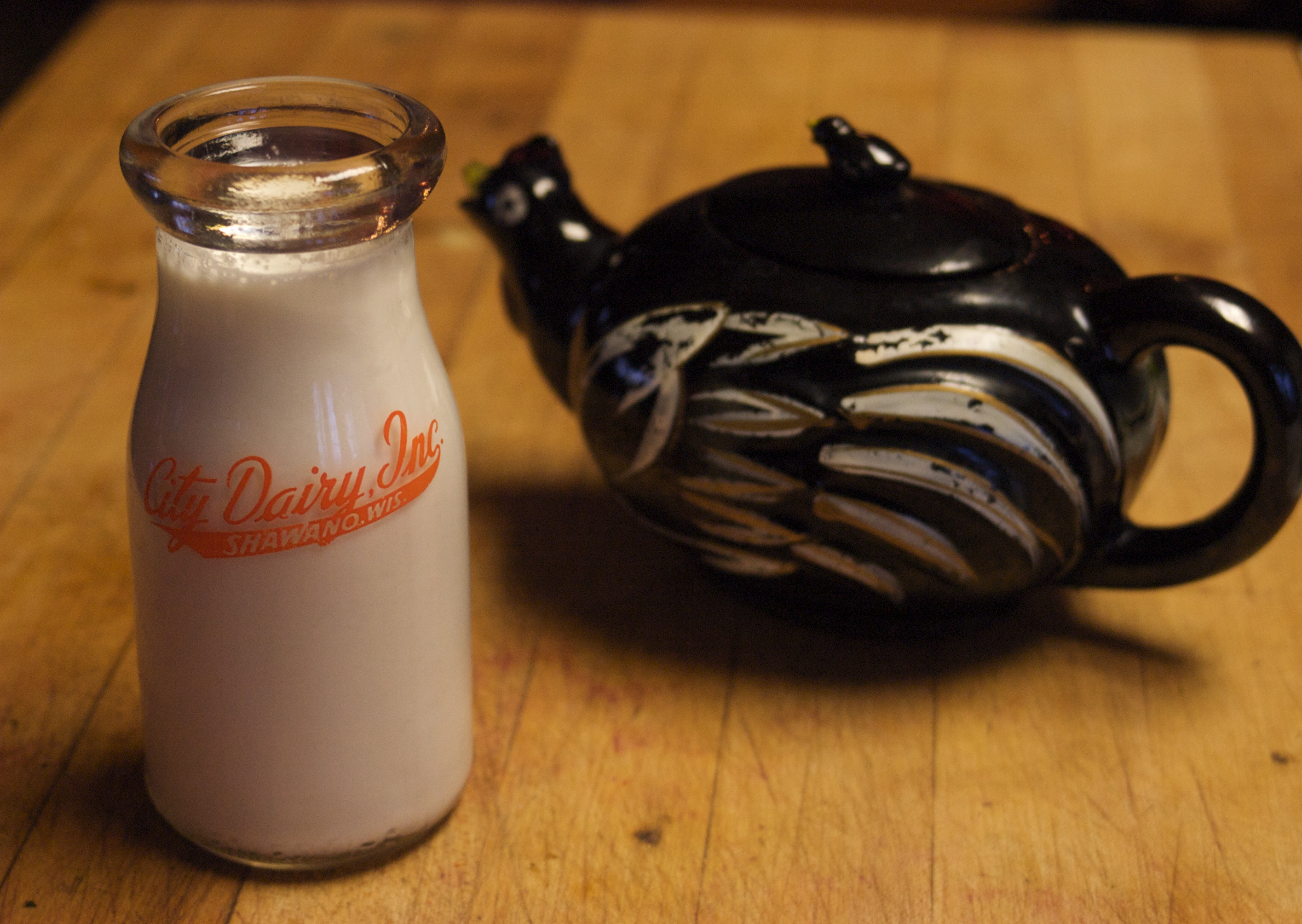
DSC_1893

Commercial almond milk can not compete with homemade. Store bought almond milk, with its overly sweet and overly processed attributes, is nothing like what can come out of an ordinary blender. Skeptical? Read the ingredients on a box of store-bought almond milk. I promise there are ingredients in there you would never put in your blender.

Homemade almond milk takes just minutes to make and is far more nutritious than anything that can be stored in an aseptic cardboard box. And you can use the leftover pulp for all kind of delicious recipes, so no waste.

Real, live, whole food.

Ready?

DSC_1864

Homemade Almond Milk Recipe
1 C soaked raw almonds (I soak and then dry all of my nuts to make them more digestible, but you can use soaked and still wet or even unsoaked/straight from the store almonds.)

1/2 C raw unsweetened coconut flakes (optional but encouraged)

5 C water

Pinch of salt

2 tsp vanilla

1 Tb honey (optional – I don't usually add this but if you are accustom to sweet almond milk this will ease your transition.) 

Process:

Heat your water to just below a simmer.

In your blender jar, combine almonds, coconut, hot water, and salt. Allow to soak. (If you are in a hurry skip the soaking. It will turn out beautifully. I promise.) Wait 15 minutes or more – you can soak all day if you wish.

Add honey and vanilla. Blend on high for 2-3 minutes in an ordinary blender or for a shorter time in a fancy-pants blender. Strain out pulp in a fine mesh strainer. (To speed the straining I first pour it through a wider mesh strainer, then strain it a second time through a very fine strainer.)

DSC_1867

DSC_1873

DSC_1876

DSC_1890

Uses for your Almond Pulp:

Make More Milk: You can make a second batch of (thinner) milk by returning the pulp to your blender and adding 3 C water and following above procedure for blending and straining. I don't love the second batch but it works well as a skim-type milk, while the first batch is very creamy. Or mix them together and call it 2%.

Make Almond/Coconut Flour: Oil cookie sheet with coconut oil. Spread the leftover pulp onto the sheet and dehydrate in a low heat oven. The flour will be in big chunks that you will need to grind up in your food processor, but it crumbles easily. Use as a gluten-free flour for making muffins, crackers, or waffles. You can even skip the drying and portion onto a cookie sheet with an ice cream scoop, then bag. This way you can add a few to every batch of baked goods you make, gluten-free or not.

Variations:

Homemade Coconut Milk Recipe: Proceed as above but omit nuts and add 1 C coconut flakes.

Any Nut Milk Recipe: Substitute other nuts or seeds for the almonds and/or the coconut flakes. The options are endless!

~ * ~ * ~ * ~

July 2011 Note: I've seen many links lately for using this recipe as an infant formula. Please, please, please find a holistic health care provider to work with before you decide to either A) supplement your breast milk or B) give nut milk to your infant. All the best to you and yours.

Postscript: How sweet you have all been since the comments box came back up. Yes, I missed you! Many of you are revisiting older posts to finally leave your comments there, and plenty of you are leaving unrelated questions on current posts. I'll get back to each of you soon if you had a question for me. I promise! Thank you for sharing your voice. It is one of my favorite things about writing here.

Grain-free Pancakes. GAPS Squash Pancakes.

We have been easing our way onto the GAPS diet for the past three weeks. By Monday we'll be 100% GAPS. All that remains is our raw milk – the only difficult piece for me to give up. Once I do it I know how easy it will be, so Monday is the day. I need a deadline or I'll drag it out forever.

What has changed in the past three weeks since we cut grains, complex carbohydrates, and sugar? Tons.

Lupine's face rash that she has had on and off since she was 1 1/2 is gone. (She has never been without it for more than a few days.) Sage's daily belly aches are gone. No more ending meals curled up on the couch or getting out of bed at night for a remedy. My eczema is nearly gone, and Pete's sugar cravings are disappearing.

Oh, and we like the food better. Really. Even Pete. Even the kids. They are raving at every meal about how much better the mountains of vegetables taste than the grains ever did. It has a certain twilight zone factor when you've been cajoling them into eating vegetables for years and now they're begging for thirds.

What does GAPS food look like? This morning it looked like this:

DSC_1134

DSC_1149

DSC_1152

DSC_1147

Pancakes made with pureed winter squash, almond butter, eggs, and a pinch of salt. These may be the best pancakes I've eaten in my entire life. (The recipe is from Internal Bliss.) Yes, with food this nourishing you forget that you ever ate wheat to begin with.

Remind me again – I'm suppose to miss grains why exactly? Actually, never mind. Grains are feeling pretty irrelevant right now.

Wooden Peg People (and Gluten-free, Sugar-free Treats).

Just a couple of weeks after embarking on the GAPS diet the kids were invited to two birthday parties. Not one. Two. Birthday parties were one of the only things I worried about with GAPS. My kids, hanging out with other kids and watching their friends eat cake and ice cream. Seemed like it would be less fun than, say, staying home and forgetting about the party all together. 

So we came up with our own solution. Today Lupine is off to one of her best friends' to celebrate her turning five. And we're bringing along our own snacks and treats – enough to share. We made a Key Lime Pie from the cookbook Internal Bliss, made with honey, fresh lime, coconut milk, macadamia nuts, and avocado (among other things). The flavor is unbelievable – creamy, rich, and tart.

We also made a batch of flax and sesame crackers to take along. Crispy and so delicious I had to cut off the kids so there would be some left to take to the party.

DSC_0992

DSC_0996

DSC_1005

The gift we put together is (in my opinion) super sweet too. Lupine selected five peg people from our wooden bits stash and dictated how they should be painted. "The mama dyed her hair pink, and her friend dyed her hair blue. And the big girl dyed hers pink, too. Oh, and they live on a boat."

So we found an old wooden boat in the garage, polished it up, and there you have it. Nothing says "Happy Fifth Birthday" quite like the punk rock boat people.

DSC_0978

DSC_0985

DSC_0989

Our Culinary Journey: Gluten free and then some.

DSC_7509

I had been waiting for years.

The day I moved out of my parents' house I stopped eating meat. Born of my big/sensitive heart and a desire to not pay someone else to do something I was unwilling to do myself (ie: kill animals), I enthusiastically quit eating meat for most of a decade. I always viewed it as a personal choice, one that did not effect how I viewed the omnivores in my life, but an extremely important one when it came to "living my truth".

From an ethical place I think I did the right thing by following my heart. Each of our hearts knows our own unique truth, and at 18 this was mine. (I'm sure for many of you it is still your heart's truth today.)

But I had a belly ache.

I had often had belly aches as a child and after a few years on a legume and grain based diet I nearly always had a belly ache. Diarrhea, a crampy gut, and other unpleasantries were the norm and each meal I ate would end not when I was comfortably full but when my stomach hurt.

In my possession at all times were various over the counter treatments including Imodium, gas-x, lactase, and tums. I was in sorry shape. Western medicine wasn't any help, labeling it as "irritable bowel syndrome" and telling me to continue to take said pharmaceuticals daily into perpetuity. No "cure", no recommendations to change my diet, just "take this pill."

And so I did. Unhappily but not aware of other options for years.

DSC_5975

And then I noticed something.

The more vegetarians I met, the more belly aches complaints I heard. Not all of course, but nearly everyone I knew who complained of chronic digestive woes were also vegetarian or vegan. And something clicked. I believe a vegetarian diet can be a healthy one, I decided, but perhaps not for me. I slowly started eating meat again, first fish that Pete and I caught ourselves (me crying for twenty minutes in the bottom of the boat after killing the fish I caught), then venison from my dad. Only wild game for the first years and that only occasionally, then slowly branching out into locally farmed organic meats."Happy meat," I called it. It was the only solution I could see to bridge my belly ache with my ethics.

It never occured to me that not only had I been eating a vegetarian diet but I also had taken antibiotics, eaten conventional food, drank chlorinated city water, and taken birth control pills. Only the food layer had occurred to me so at that time it was the only correction that I made.

DSC_6189

Fast forward another decade after returning to a non-vegetarian diet. My belly still hurt. Not as much, but it still hurt. Eventually I gave up gluten and a few other trigger foods but it still was there. And dark circles beneath my eyes and an edge of un-wellness that I couldn't put my finger on. It was like a shadow, barely perceptible but present.

Then in 2004 as if by magic I stumbled upon a book at the coop called "Breaking the Vicious Cycle: Intestinal Health Through Diet." Without even opening the book every cell in my body confirmed that it was my right answer. My intuition was screaming out for the information in this book. I thumbed through it then and there, standing in the isle at the coop then turned around my full shopping cart, putting most of my items back on the shelf. I filled my cart with nuts and nut flours, honey, eggs, meats, fruits, and vegetables.

The Specific Carbohydrate Diet was designed to heal children (and adults) with severe gut imbalances and was found to also reduce or reverse many mental health issues. The diet, if strictly adhered to is said to correct everything from irritable bowel syndrome, chrone's disease, celiac, autism, colitis, and ADHD – among others. It spoke to the underlying imbalance of a gut that isn't working as it should.

I read the book cover to cover and started "The Specific Carbohydrate Diet" just a week later. Within three days the stomach ache I had carried with me for nearly two decades was gone. Completely gone. I honored the diet for a year and found all of the digestive symptoms I struggled with since childhood disappeared. So did my eczema, dark under eye circles, and malnourished appearance. It was pretty sweet. My gut healed by this diet, I returned slowly to "normal" omnivorous food and saw no return of my symptoms.

I joked that after being on the Specific Carbohydrate Diet for one year I ate all the animals I saved during my decade as a vegetarian.

DSC_6041

Fast forward a few more years, to today.

I'm still well. I still eat "happy" meat and limit my grains. We live primarily on traditional foods, based on whole foods, bone broths, vegetables, and soaked or sprouted grains. But those grains. And that sugar… they are so seductive. So I eat more of them than I should and my belly churns and howls when I do. It's too much, I know. And I've come to think that we all (in our house and much of our society) have digestive systems that are a bit out of balance. Gut flora is imbalanced by chlorinated water, antibiotics, birth control, and environmental toxins. And I believe all four of us have signs of a flora or candida imbalance: thrush and colic as babies, sugar craving, a little eczema, and a sporadic red rash on Lupine's chin.

So in the next couple of weeks we are embarking on the GAPS diet (a variation on Specific Carb. that includes traditional foods and probiotics) as a family. While giving up grains, sugar, and most dairy isn't something that sounds like great fun at the surface, I am actually stoked to be heading down this healing path once more. I've done it before and know we can do it again, and I believe it will heal and nourish us on many levels.

For more on the GAPS diet see this site, and information about Specific Carb. can be found here.

~ * ~ * ~ * ~

Thanks to Tiffany who introduced me to the GAPS diet this autumn. I'll get you your book back, I promise!