Crispy grain-free cracker recipe

gluten-free, grain-free cracker recipes| Clean. www.lusaorganics.typepad.com

gluten-free, grain-free cracker recipes| Clean. www.lusaorganics.typepad.com

gluten-free, grain-free cracker recipes| Clean. www.lusaorganics.typepad.com

gluten-free, grain-free cracker recipes| Clean. www.lusaorganics.typepad.com

A couple of weeks ago I told you I wouldn't be sharing recipes any time soon. Less than an hour later two batches of crackers were coming out of the oven and my entire family was swooning, lost in grain-free crispy cracker bliss.

We've made them a couple of times a week ever since.

These crackers are easy to make. Delicious to devour. And crazy affordable compared to crackers from the coop or the grocery store.

Oh, and healthy. I think I'm supposed to tell you they are healthy. Yes. That, too.

Feel free to modify the recipe with your favorite seasonings, spices and seeds. I'm thinking garlic & sesame, onion & poppy seed, or chili-powder & lime. Ooh, and maybe pistachio something…

Oh, mercy. This could get out of hand.

The secret, sweet friends, is tapioca flour. Do you bake with tapioca flour? Along with almond and coconut flour these three are the power triangle of grain-free baking. Tapioca flour, however, is my favorite of the three. It's a little piece of heaven in a Bob's Red Mill bag.

Are you ready to have your grain-free, gluten-free cracker-loving mind blown?

Well here you go.

One recipe is grain-free, gluten-free, and nut-free; the other is grain-free, gluten-free, egg-free, dairy-free, and vegan. (There I go, trying to make everyone happy again.)

This time though I think it might have worked.

gluten-free, grain-free cracker recipes| Clean. www.lusaorganics.typepad.com

Parmesan Crisps

These crackers are super crisp and snappy. There were everyone's favorite (except mine) by a large margin. As a mother I love each recipe for different qualities but I love them equally. (Okay, okay. They're my favorite, too. But only by a little.)

Be sure to roll them out very thin for a crispy cracker. If you don't they'll be a little gooey in the middle.

* I've hidden the leftovers from the third and fourth batch of these I made today from my children. And yes, also from Pete.

gluten-free, grain-free cracker recipes| Clean. www.lusaorganics.typepad.com

Ingredients

3/4 C tapioca flour

1/2 C grated Parmesan cheese (1/4 c packed Parmesan)

3 Tb ground flax seeds (I grind mine in an old coffee mill)

1/2 tsp salt

3 Tb water

2 Tb cream (alternatively you can omit water and cream and add 5 Tb whole milk)

1 Tb olive oil

Process

Preheat oven to 325.

Combine all ingredients except liquids (water, cream, and oil) in your food processor. Pulse a few times to combine.

Add liquid ingredients and process until thoroughly combine and looking crumbly but most.

Open up your food processor and pinch a small handful together in a ball. If it holds together then you're good to go.

If it's too dry and crumbles apart add additional water 1 tsp at a time. If it's very wet and sticky add additional tapioca flour 1 tsp at a time.

Turn out onto a sheet of parchment paper, form into a ball, and flatten.

gluten-free, grain-free cracker recipes| Clean. www.lusaorganics.typepad.com

Roll out very thin (as thinly as you can!) and then cut into cracker shapes with a pizza cutter or knife. Keep your crackers under 2.5" across, otherwise they tend to be sticky in the middle. If your dough is unruly you can roll it out between two sheets of parchment. I don't find it necessary, but just in case.

Bake for 20 – 25 minutes, remove from oven, and cool on a cooling rack.

In the unlikely event that you have leftovers, store them in an airtight container. 

gluten-free, grain-free cracker recipes| Clean. www.lusaorganics.typepad.com

Paleo Sesame Seed Crackers (vegan)

Think shortbread minus the sweet. Tender crisp, crumbly, and rich. I have a vague recollection that this is what a Wheat Thin felt like as it crunched between my teeth. But I might be wrong. It's been a long time.

These crackers are crisp and nutty with a tender crumb. So good. If you love sesame you'll lose your mind.

Ingredients

3/4 C tapioca flour

2 Tb coconut flour

1/4 c almond flour

2 Tb sesame seeds

2 Tb ground flax seeds

generous 1/2 tsp salt

3 Tb olive oil

3 Tb water + more as needed

Process

Preheat oven to 350.

Combine all ingredients except water and oil in your food processor. Pulse a few times to combine.

Add liquid ingredients and process until thoroughly combine and looking crumbly but most.

gluten-free, grain-free cracker recipes| Clean. www.lusaorganics.typepad.com

Open up your food processor and pinch a small handful together in a ball. It should hold together easily without being sticky. (If it's too dry and crumbles apart add additional water 1 tsp at a time. If it's very wet and sticky add additional tapioca flour 1 tsp at a time.)

Turn out onto a sheet of parchment paper and form into a ball. Let rest for five minutes.

Flatten out dough and roll out between two sheets of parchment.

Cut into cracker shapes with a pizza cutter or knife.

Bake for 15 – 20 minutes, remove from oven, and cool on a cooling rack.

In the unlikely event that you have leftovers, store them in an airtight container.


I saved the recipes as a PDF here for easier printing. Enjoy!

Download Grain-freeCrackerRecipes-twoways

Inspiration for these recipes came from here and here


DIY decoupaged switch plates

DIY decoupaged switch plates | Clean. www.lusaorganics.typepad.com

DIY decoupaged switch plates | Clean. www.lusaorganics.typepad.com

DIY decoupaged switch plates | Clean. www.lusaorganics.typepad.com

I think the most enthusiastic feedback I got on my recent kitchen remodel was about my snazzy Nikki McClure switch plates. I cranked them out in an evening and they were so quick, so simple, and so darn satisfying. My kind of project, since anything more ambitious than this tends to languish half-done for years in my craft room.

A few of you asked for a proper tutorial on how to make your own, so when I made a second set for a housewarming gift last week I decided to take a some photos and write up a tutorial for you.

Here it is!

DIY decoupaged switch plates | Clean. www.lusaorganics.typepad.com

How to Decoupage a Switch Plate Cover & be All Sorts of Awesome


1. Choose your artwork.

DIY decoupaged switch plates | Clean. www.lusaorganics.typepad.com

Old calendars, magazines, kid-art, and medium weight scrapbooking paper all work well. Thin paper can be too fragile for this project and card-stock tends to be too thick, so aim for something sturdy but not too thick. Fabric also works, they say, but I haven't tried it yet.

Note that some papers will wrinkle. If you aren't sure how you feel about that do a test with a scrap of paper you don't love. Stick it to something plasticy (an old milk bottle for example) and see what happens. Wrinkles don't bother me, so I use whatever paper I love.

My paper of choice (thus far) has been Nikki McClure art from calendars going back a few years. I think I have a girl-crush on Nikki's art and can never bring myself to toss old calendars of her work. (One of you sweet people even mailed me one after seeing my decoupaged suitcase a few years back. You're nice.)


2. Using your switch plate as a guide, cut a rough rectangle approximately 1" bigger all around than your plate.

DIY decoupaged switch plates | Clean. www.lusaorganics.typepad.com

Be sure to center the switch plate over the art you want to appear on the completed project. You'd also be wise to check that the switch itself doesn't become an awkward appendage or something obscene depending on the art you choose. (Unless that's what you're going for, in which case, align that switch carefully with whatever you want it to prove. I won't judge.)


3. Notch your corners.

You can do this by cutting your paper at a 45 degree angle at each switchplate corner (a good idea I came upon after these were already made), or by notching them as shown below.

Note how I angled the flaps slightly to make wrapping the paper around the back easier in the next step. The flap on the right below was notched even deeper so it wrapped nicely to the back.

Do a test wrap and snip more paper away until it's not too bulky at the corners.

DIY decoupaged switch plates | Clean. www.lusaorganics.typepad.com

4. Coat the back of your notched paper with an even layer of Mod Podge, working the Mod Podge all the way to the edges.


5. Quickly center your switch plate over the paper. Turn over and adjust the paper as needed to center. Smooth front with your fingers to remove bubbles.


6. Now turn the switch plate over in your hand so the back is facing you. Wrap the longer sides of your switch plate firmly around to the back and press flaps into plate with your fingers as shown below.

Repeat with short flaps.

DIY decoupaged switch plates | Clean. www.lusaorganics.typepad.com

7. After all four flaps are pressed firmly into place, turn the switch plate around in your hand looking for any bubbles or loose spots.

Smooth them out gently with your fingers. Too much pressure and you'll rub the color right off your paper, so be gentle!


8. Lay your switch plate face down on a cutting mat or piece of card-stock. Using an Exact-o knife, carefully cut an X in the switch opening.


9. Fold these flaps toward the back, adding additional Mod Podge if needed to hold into place. These can be buggers so keep at it until they stay put.

DIY decoupaged switch plates | Clean. www.lusaorganics.typepad.com

10. Poke a small guide hole from the back in each screw opening using the point of your Exact-o knife.


11. Flip the switch plate over and press on these guide holes with your finger to make a small depression in the paper at each screw point as (poorly) shown in the photo below. (It's hard to see. Sorry.)


12. Using your Exact-o knife to cut a tiny X in each of these depressions with the point of the knife. This will ensure that your paper does not tear when you attach your switch plate.

DIY decoupaged switch plates | Clean. www.lusaorganics.typepad.com

13. Coat the front of your switch plate with a light, even coat of Mod Podge.


14. Allow to dry completely and repeat 1-2 more times.

DIY decoupaged switch plates | Clean. www.lusaorganics.typepad.com

15. Finish with a clear coat of spray paint if desired. (I skipped this step and they are holding up well just the same.)

You're done! Carefully screw into place and admire the awesomeness you just made, or pack them up in a gift basket or care package for a friend and share the love.

Warning: this project is addictive. You might make dozens. Don't say I didn't warn you.

DIY decoupaged switch plates | Clean. www.lusaorganics.typepad.com


How to make an upcycled playhouse

Make an upcycled pallet playhouse | Clean. www.lusaorganics.typepad.com

Make an upcycled pallet playhouse | Clean. www.lusaorganics.typepad.com

Make an upcycled pallet playhouse | Clean. www.lusaorganics.typepad.com

Make an upcycled pallet playhouse | Clean. www.lusaorganics.typepad.com

Make an upcycled pallet playhouse | Clean. www.lusaorganics.typepad.com

Make an upcycled pallet playhouse | Clean. www.lusaorganics.typepad.com

Make an upcycled pallet playhouse | Clean. www.lusaorganics.typepad.com

Upcycled pallet playhouse | Clean. www.lusaorganics.typepad.com

Upcycled pallet playhouse | Clean. www.lusaorganics.typepad.com

Make an upcycled pallet playhouse | Clean. www.lusaorganics.typepad.com

First, a rambling preface…

When the kids were little I spent hours (hours) on Craigslist looking for the perfect secondhand cedar playhouse.

After months of searching I found one. Untreated lumber, not too big, a slide, swing, perched cedar clubhouse, and in my price range. Cheaper than the lumber it would take to make our own.

So Pete and a buddy drove the three hours round trip to take it down and bring it home.

Yay team! We were a few hundred dollars poorer, but we were playhouse rich.


But "perfect" from an adult's perspective isn't always perfect to the kids. 


As excited as they were by the idea of the playhouse, when it came to play value it soon fizzled. 

And unlike a blanket fort there was no folding it up and putting it back in the linen closet when their interest waned. 

So there it sat.


It sat in the yard – almost always empty – in all of it's fancy cedar perfection while the kids made forts under the bushes in the backyard.

When we moved I left it behind rather than bring it out to the farm. It just wasn't worth it.

They never missed it.


Like so many other lessons of parenthood I realized for the umpteenth time that less is more.


Or as my great-grandma stated (while my sister sat on the floor playing with canning jar rings as a baby), "Kids don't need toys."


Because yes, okay, yes – I was the mom who wanted the perfect Waldorf playroom. Like the quality of my parenting could be defined by the quality of our playthings.

And we did it on the cheap (for fancy anyway). Thanks to Pete and I both being crafty we made much of it ourselves. The rest was picked up locally at yard sales, as second-hand gifts from friends, or bought off of Craigslist, Ebay, and our local email list.

But you know, they rarely played with most of it.

I loved it like crazy, but they were rather "eh" about most of it. (Not at first, but with time.)


Sure, there are exceptions. They each had (and still have) their favorites. Toys that they played with constantly then and can't part with even now. But there was simply too much.

I took it too far. Now I know.


And as it turns out the quality of my parenting has absolutely nothing to do with the kind of toys I picked up off the floor at the end of the day. But you knew that already.


So if I can be so bold, I would tell anyone saving pennies for fancy Ostheimer wooden animals that are not in the budget, that ten years later it wasn't really worth it. 

Shutter.

And that at least around here, the thrift store plywood dollhouse with cobbled together furniture has gotten 1000 times more play than the expensive saved-our-money-for-months German version we once had.

Sigh.


Live and learn. Kids don't need (lots of fancy, expensive) toys.


Having playthings on hand is lovely. We'll never be a toy-free house and I don't suggest you gut your playroom or your backyard on my experience. I'm merely sharing my realization that the fancy stuff wasn't all that.

I share this in hopes that someone who is wishing for something they can't afford will read this and say,  "Oh! Those yogurt tubs in the sandbox really are as awesome as a $50 set of wooden scoops." 

They are.

Now you know. 

But I digress.

And we were here to talk about the playhouse. The pallets. The project! 

Make an upcycled pallet playhouse | Clean. www.lusaorganics.typepad.com

My girl loves her mud kitchen play. She always has. A few old dishes, some yogurt tubs, and the flowers from the garden and she'll play happily for hours.

And though less is more I thought a little nook for her to play in would be a sweet (simple) addition.


So last weekend when Pete cut out a section of our barn and installed a bigger, better (salvaged) window I saw the discarded section of wall leaning against the fence I kind of freaked out.

Like I might have before at the sight of a set of wooden toys at a yard sale. (Ahem.)


I could see it in my head perfectly. In an instant. 

An upcycled mud kitchen for Lupine.

A place to corral her dishes and pails and a little simple work surface to save our picnic table from it's mud kitchen fate. 


Pete agreed and instead of hauling the wall to the dump he hauled it up the hill to Lupine's favorite play place – previously just two tree stumps at the edge of the hayfield.

We also brought up two oak pallets, a few L-brackets and shelf brackets, some screws, and a drill.

Thirty minutes later it was done. Boom. A new mud kitchen/playhouse for my girl. 


I was thrilled, Lupine was thrilled, everyone was thrilled.

First, it's adorable. (If I do say so myself.) Second, it's upcycled. And third, it didn't cost us a penny!

And I was pretty jazzed to have done almost all of the work myself. (Cue dramatic bow.)


The process was simple and you could create one with three or even four recycled pallets instead of two plus a piece of your barn.

Old doors would be amazing here too (which I have an inexplicable affinity for), and so would a couple of discarded window screens or screen doors in the mix.

Look around. Ask around. See what you can find.


Care to make your own? Here's how.

1. Gather your supplies.

2. Make an "L" shape with two of your wall pieces to form a front wall and side wall. Secure well with screws. 

3. Add second side wall and attach as above.

4. Inside use shelf brackets or L-brackets to install a few small shelves for storage and a work counter. I added one that was a scrap tree section from a tree we recently cut. Be creative and use whatever is at hand.

That's it! Really!

A word on pallets and safety: When you choose your pallets here are some excellent tips to help you find clean, green pallets and avoid the toxins that some pallets are treated with. 

What have you made with upcycled materials lately? Feel free to share a link in the comments below! 

Backyard forts (Or: Let’s not overthink this)

Make a simple backyard play fort | Clean. www.lusaorganics.typepad.com

Make a simple backyard play fort | Clean. www.lusaorganics.typepad.com

Make a simple backyard play fort | Clean. www.lusaorganics.typepad.com

Make a simple backyard play fort | Clean. www.lusaorganics.typepad.com

Make a simple backyard play fort | Clean. www.lusaorganics.typepad.com

Make a simple backyard play fort | Clean. www.lusaorganics.typepad.com

Make a simple backyard play fort | Clean. www.lusaorganics.typepad.com

I spent one evening this weekend searching Pinterest for the perfect backyard tent to make with my kids.

And I found some charming designs. Wooden frames, hemmed fabrics, grommets, twinkle lights – the works.

Every one was picture-perfect.

And as I closed my laptop I decided that we wouldn't make backyard tents this weekend after all.

Because I had no bamboo poles, dowels, or 1×2's. I only had two grommets, and no yard after yard of perfect fabric to cut and sew into a tent. And frankly, no ambition to take on a six hour craft project after weeding eighteen thousand thistle plants out of my strawberry bed.


Don't get me wrong. I adore Pinterest. I find great inspiration there. But sometimes what I see is all a bit beyond my reach.


And then as I looked out on my kids playing in the backyard I realized what was happening.

It was the perfection myth bubbling up again.

The false idea that if it isn't photogenic it isn't worth doing.

That if it isn't perfect it isn't enough.


What nonsense.

I wasn't going to play that game.

We were building forts, dang it.


So instead of going back to Pinterest I went to the linen closet. I pulled out some old bedsheets, blankets, and table cloths.

I went to the barn and gathered all the bailing twine we pulled off the hay bales last winter.

I grabbed my pocket knife and we set to work.

Not Pinterest-style, but old school. Like what I built when I was a kid with only my imagination to guide me.


And we did it. In one afternoon.

Two fabulous, simple – and yes – imperfect play forts.

Total cost: $0.

Total time: 5 minutes for Lupine's, all afternoon for Sage's as he tweaked and modified and tricked his out again and again.

And the play value? Fan-freaking-tastic.


Want to make one, too? It's easy. Really.

You can squeeze it between the sidewalk and your garage, tuck one in the corner of your patio, or set it up in the woods. Be where you are and use what you've got.

Heck, you could even make one without a yard if you screwed a couple of lag bolts into your living room walls and anchored the corners with bean bags or duct tape.

And, of course, it doesn't need to be perfect. (But you already knew that.)

So grab your kids, some old sheets, and get outside.

Here's what to do:

Make a simple backyard play fort | Clean. www.lusaorganics.typepad.com

Make a simple backyard play fort | Clean. www.lusaorganics.typepad.com

Make a simple backyard play fort | Clean. www.lusaorganics.typepad.com

Make a simple backyard play fort | Clean. www.lusaorganics.typepad.com

Make a simple backyard play fort | Clean. www.lusaorganics.typepad.com

Supplies

  • Large bedsheet, table cloth, or other sturdy fabric
  • Rope, twine, or clothesline
  • Knife or scissors for rope
  • Tent stakes or a few strong sticks
  • Four small rocks
  • Clothespins (optional)
  • Blanket and pillows for the ground (optional)


How-To

1. Find the biggest flat sheet you can spare for the day or the week or forever. (You can still use them for sheets as for this basic version there's not need to cut or sew it.)

2. Run a strongish rope, clothesline, or spliced lengths of bailing twine tightly between two trees, a tree and an eye bolt on your house, or your fence and playhouse. Whatever you've got that will hold the weight of a sheet. Be creative! Set the height based on the size of your sheet (smaller sheet = lower line). Ours is a full sheet and set set it at waist/chest height.

3. Suspend your sheet along this rope. The sheet above is centered but you could also hang it off-center for a more one-sided shelter. If needed use spring clothespins to secure your fabric.

4. Sage suggests tucking a small rock into each sheet corner and tie a rope or piece of twine tightly around the rock. (The rock will keep the corners from slipping out.)

5. Secure to a tent stake, root, tree trunk, or stick pushed into the earth. Angle the stake back toward the tent to keep it from pulling out.

6. Trick it out with doors, windows, walls, tree branch supports – whatever inspires you or your kids. (Optional)

7. Line with a blanket or pile of pillows if you wish, and get in there and play!


There. Now aren't you glad you didn't get disouraged by those pretty, fancy play tents?

Me, too.


Take that, perfection.


Homemade paper lantern tutorial

As November arrives at my latitude, the season of darkness has truly begun.

Dark when we wake up, dark long before we go to bed.

Dark, dark, dark.

And while for some it's a depressing shift, I secretly love the nesting that the darkness inspires.

I find myself inviting warming light inside, and candles that sat unused since last winter are found and lit.

Below is a repost from 2010 on crafting a homemade lantern from watercolor paper. Three years later we still have these lanterns and they are still beautiful.

If you're interested in other crafts that cast a warm glow, you can find my beeswax lanterns here and decoupaged candle jars here.

On with the tutorial!

Homemade paper lantern {Clean.}

Homemade paper lantern {Clean.}

The days here in the north are growing shorter.

By dinner time the
outdoors are immersed in complete darkness, and when we wake in the
morning the sun is still nowhere to be seen. And the days are growing shorter still.

To celebrate the light that shines within each of us (even during
these darkest days) the children and I made paper lanterns and carried
them out into the darkness for a bedtime walk.

The lanterns represent
the brightness we bring to the dark, and the positive effect our bright
spirits bring.

Homemade paper lantern {Clean.}

The process of making the lanterns is more simple than you might
imagine. We loosely interpreted the pattern for Martinmas lanterns from this lovely book (another recommended read) as our jumping off point. I have shared our version of the lanterns below.

Supplies

Watercolor paints

Watercolor paper (ours is approximately 14" x 20", purchased here)

Ruler

Scissors

Pencil

Craft knife

Cutting mat or board

Kite or tissue paper

Glue stick

White glue

5 spring-type clothespins per lantern

Yarn or wire for handle

Hole punch (optional)

Fireproofing spray (optional)

Instructions

1. Create a simple watercolor painting. Allow to dry completely. (You
will have enough paper for two lanterns from each piece of paper.)

Homemade paper lantern {Clean.}

2. On the back of your painting carefully mark the following measurements with pencil and a straight edge:

  • Divide the painting in half with a horizontal line. To simplify, you
    may cut your paper into these two long thin strips now. (Our strips were
    7 1/2" tall and almost 20" long.
  • Parallel to your original cut mark two lines: one 1/2 inch down from
    the top and a second line 2" up from the bottom. These will form the
    top lip and the bottom of the lantern.
  • Perpendicular to your original line, begin at the left and measure
    in 1". Mark line. This will be an overlapping piece used to form the
    lantern during the final steps of the project.
  • From this 1" mark, measure five 3 1/2" panels and mark. These will be the five window panels.
  • Cut off any excess after your last 3 1/2" panel.

3. Score all lines using a straight edge. (This will make folding your lantern easier.) 

Homemade paper lantern {Clean.}

4. Cut tabs
for the top and bottom of your lantern by cutting all lines above and
below your two long horizontal lines. (Confused? See two photos below
for a visual of where you cut.)

These tabs will overlap and form the
bottom and the top lip of the lantern when you glue the lantern
together.

5. With a
pencil, draw the shapes you desire for windows on the back of your paper
strip. Think simple forms – circles, stars, even rectangular "windows".

6. Use a craft knife (X-acto type) to carefully cut out the windows.

Homemade paper lantern {Clean.}

7. Flip over
your painting and admire your work! Add additional details if desired
with hole punch or craft knife. We used a small circular hole punch to
embellish our lanterns.

Homemade paper lantern {Clean.}

8. Cut kite paper windows the size of your main panels. Glue into place with glue stick and smooth.

Homemade paper lantern {Clean.}

(Note:
the next step requires a teeny bit of patience. At least it did for me.
The lantern has a propensity to spring open while you are encouraging it
to stay closed. Hang tight! You are almost done, and you are smarter
than the glue.)

9. Fold your
lantern carefully into shape, creasing each scored line firmly. Observe
where the flaps overlap on the top, side, and bottom.

Apply a thin
layer of white glue on each overlapping point, then refold the lantern
pressing the glued panels together. (These will be triangles of glue on
one end of each flap.)

Be consistent with the end you glue (all on the
left, for example) so that you can neatly close one flap after another
and end up with a firm secure bottom.

10. Use a clothespin at each overlapping point on the top of the
lantern to hold the tabs together until the glue is set.

Before the glue
is all the way dry remove the clothespins. (This way you don't
accidentally tear the lantern when you remove the clips). 

Homemade paper lantern {Clean.}

10. Cover
the hole in the bottom of your lantern with a scrap of watercolor paper
approximately the size of the base of your lantern. Secure with more
glue.

11. Punch
two holes in the lantern's top rim and string through some wire or wool
yarn. (Skip this step if you are making a candle holder instead of a lantern.)

Knot yarn securely.

12. Add a tea light candle, securing to the
bottom with poster putty (if you, like me, lack poster putty gum will
work in a pinch, and adds a minty smell to the whole event.)

(One
thought: for those of you with young children or a concern of you little
one holding a paper box with fire inside, battery powered tea lights
are a good choice. I believe that the responsibility of holding a
lantern with a candle inside is wonderful for a child, but perhaps that
should wait until they are 4 or 5.

13. You are done! Now just wait for nightfall and take your lantern with you to spread a bit of light into the darkness.

Homemade paper lantern {Clean.}

DSC_9148


Perfect homemade chai. (A recipe.)

This is a repost from last autumn. And I thought we could all use this recipe again on this cool September morning.

Make it with nettle, raspberry leaf, and rooibos tea, or substitute black tea for a more traditional caffinated version.

My favorite drink. Ever.

Love,

Rachel


Perfect homemade chai. (recipe!) | Clean.

Perfect homemade chai. (recipe!) | Clean.

Perfect homemade chai. (recipe!) | Clean.

Some time ago I shared my old nettle chai recipe with you. And really, it's good. So good.

But since that time I have continued to tweak and refine the recipe, week after week.

Like so many things, cooking – and yes,
simply making tea – is a living process around here. And where that
recipe is at now – well, that old version just can't hold a candle to
it.

So I jotted down my latest recipe for you. The changes are minor –
just four new ingredients. But to drink it is to love it. As in
seriously obsessively love it.

It's crazy good.

This newest incarnation of chai is spicy and sassy and sweet and amazing.

And caffeine-free to boot without feeling like something was
forgotten. I loved the nettle version I shared with you before, but it
always felt just a little too thin to me. I knew the black tea wasn't
there. But this version? You won't even miss it.

That being said, you can also throw in up to six black tea bags to
make yours with a caffienated kick. If I'm jonsing for caffeine I'll
often make the whole pot without, then add a single tea bag to my cup.
Then the kids can enjoy from the pot and I can have a little jolt at the
same time.

What is different from last recipe?

Here are the four magical tweaks:

Perfect homemade chai. (recipe!) | Clean.

1. Rooibos

When I cut out the black tea I really missed the dark richness that
it gave. The mouth feel of black tea. And no matter what I added I just
couldn't reproduce that. Until I tried rooibos. Rooibos is herbal but
has the dark richness and thicker mojo of black tea, without the cranky
jitters.

2. Star anise

Lupine would tell you it's cute (always helpful in a spice) and she's
working on hot gluing one she swiped from my spice cabinet to a
barrette. I'm more interested in the smooth, floral edge it lends. Of
all four tweaks this is the most subtle, so if you are out of star anise
charge forth without it. I add one to a large pot of chai.

Perfect homemade chai. (recipe!) | Clean.

3. Chili powder

Holymoses. I don't know what compelled me to first put chili powder in my tea. (Truly. I have absolutely. No. Idea.)

But since the first morning I did I don't think I've skipped a day.
It's surreal how transcendentally good even a humble cup of black or red
tea is with a pinch of chili powder. (My standard morning tea is now a
cup of black tea with a pinch of ground ginger and a pinch of chili
powder.)

And in chai? It's spicy heaven. If you are terrified of spice start
slowly but if you are feeling brave add a decent pinch. Good morning!

It's freaking fantastic I tell you.

Do be sure your chili powder is just ground chilies. We don't want salt or funny chili seasoning blend in our tea.

Perfect homemade chai. (recipe!) | Clean.

4. Coconut sugar

Oh, coconut sugar. Where have you been all my life?

We long ago gave up refined sugar of all types. (Except that type in that hidden pint of ice cream in the back of the freezer. Shhhh…) When we began to eat more Paleo foods we discovered coconut sugar in lots of recipes.

And unlike agave's tarnished reputation and recent fall from hippie
food glory, coconut sugar is clean. We reach for it often because it
doesn't jack your blood sugar. (A good thing for lots of health reasons.
Please don't bring up that ice cream.) It's also easy on your gut and has a more subtle flavor than honey, maple, or stevia in recipes. 

But enough chatter. Let's get on to the recipe, shall we?

Are you ready? Because if you are, know that you'll want this every day. Consider yourself warned.

Perfect homemade chai. (recipe!) | Clean.

Perfect homemade chai. (recipe!) | Clean.

Perfect homemade chai. (recipe!) | Clean.

Perfect homemade chai. (recipe!) | Clean.

Rooibos-Nettle Chai

2 tsp Cardamon seeds or 2 T cardamon pods (ideally crushed with a
mortar and pestle but whole works okay too if your lack of a spice
grinder would stop you)

1/2 tsp whole peppercorns

Scant 1/2 tsp cloves

1"
x 2" piece of fresh ginger, sliced thin or smashed with the butt end of a knife handle (or substitute 1 scant tsp dried ginger)

1 star anise

1-2 cinnamon sticks or 1 Tb cinnamon bark chips

1/4 tsp chili powder or 1 small whole dried chile

1/2 cup dried nettle

1/3 cup raspberry leaf

1/4 cup rooibos tea

coconut sugar to taste (1-3 tsp per cup, approximately)

milk of your choice (I use raw cow milk but it's outstanding with homemade coconut-almond milk as well.)

Perfect homemade chai. (recipe!) | Clean.

Perfect homemade chai. (recipe!) | Clean.

Bring 6 cups water to a boil with the spices. Cover and simmer for 5 to 25 minutes, depending on how spicy you like your chai.

Add nettle, raspberry leaf, and rooibos. (Note: While both nettle
and raspberry leaf are safe, healthful herbs, nettle can be a bit
drying to your system. In the winter feel free to leave it out if you
are feeling dry. I add it because I appreciate the minerals. Listen to
your body on this one if you drink it often.)

Remove from heat and steep covered for 15 minutes. 

Strain out and compost your herbs. (Or if you simmered your spices
for a shorter amount of time, strain out the first batch of chai, then
add 4 cups of water to the herbs, simmer covered for 10 minutes, and
then remove from heat. Let it steep all day. You'll have a second batch
of chai that's almost as good as the first for no additional effort.)

Transfer your chai infusion to a glass jar and store in the fridge for up to a week.

To drink, combine 3 parts chai with 2 parts milk or whatever
proportions your palate dictates. Warm and sweeten with coconut sugar to
taste (also lovely is half coconut sugar and half honey, or just honey
if you don't have coconut sugar on hand).

Drink and enjoy, and wonder how you ever lived a day without this chai.

Love,
Rachel


Cherry chocolate chunk ice cream recipe. (egg-free, dairy-free/vegan option)

Cherry chocolate chunk ice cream recipe. (egg-free, dairy-free/vegan option)

Cherry chocolate chunk ice cream recipe. (egg-free, dairy-free/vegan option)

Cherry chocolate chunk ice cream recipe. (egg-free, dairy-free/vegan option)

Cherry chocolate chunk ice cream recipe. (egg-free, dairy-free/vegan option)

I realized last night that if I were writing an ice cream book (rather than a parenting book) it would be done by now.

Because seriously.

This was so good, and ridiculously easy. A little of this, a little of that, done. Perfection.

If only everything were this easy.

My mom recently bought me this ice cream maker.

We've been hand-cranking our ice cream forever with a thrift-store machine.

But the quality of ice cream we're getting out of this baby is astounding. It's lighter and creamier than what we made before. I'm a little smitten by this gadget.

So once a week we're making a new batch of ice cream. Some we make up, some we pull from my small pinterest recipe obsession and others come from books.

Because we limit eggs I picked up this book which is egg-free but completely decadent.

The recipe below is loosely based on a recipe found there for cherry-chocolate ice cream.

Notes:

  • Feel free to replace all of the cream and milk with coconut milk for a dairy-free variety. You may  also omit the honey and add an additional 1/4 C of coconut sugar if you are vegan.
  • The milk I used was raw when we started, the cream was not (because that was what I had).

Cherry chocolate chunk ice cream recipe. (egg-free, dairy-free/vegan option)

Farmstead Cherry Chocolate Chunk Ice Cream

Ingredients

2 cups heavy cream

1 cup raw milk

1/2 cup coconut sugar

scant 1/4 cup raw honey

1 1/2 cups pitted sweet cherries, coarsely chopped

1 tsp almond extract (you could use vanilla but it just won't be the same)

5 oz high quality chocolate, coarsely chopped (I used dark chocolate.)

Process

Heat cream, milk, and sugar over medium-low heat. Stir often. When piping hot (but not yet simmering) remove from heat.

Add honey and stir to dissolve.

Add cherries and cover.

Transfer to a mason jar and move to the fridge. (To save my fridge from doing so much work I let mine sit out for 1 hour before transferring to the fridge. You can also stand the jar in a basin of cool water and slowly add ice to the water until cold if you are in a hurry.)

When chilled add almond extract.

Transfer to your ice cream maker and freeze.

Just before it looks done, add chocolate.


DIY giant bubble wand tutorial

Giant bubble tutorial. [Clean.]

Giant bubble tutorial. [Clean.]

Giant bubble tutorial. [Clean.]

Giant bubble tutorial. [Clean.]

Giant bubble tutorial. [Clean.]

Yesterday I found myself inexplicably edgy. Grumpy, jumpy, terse, and sour.

So I did what any reasonable person would do in this state.

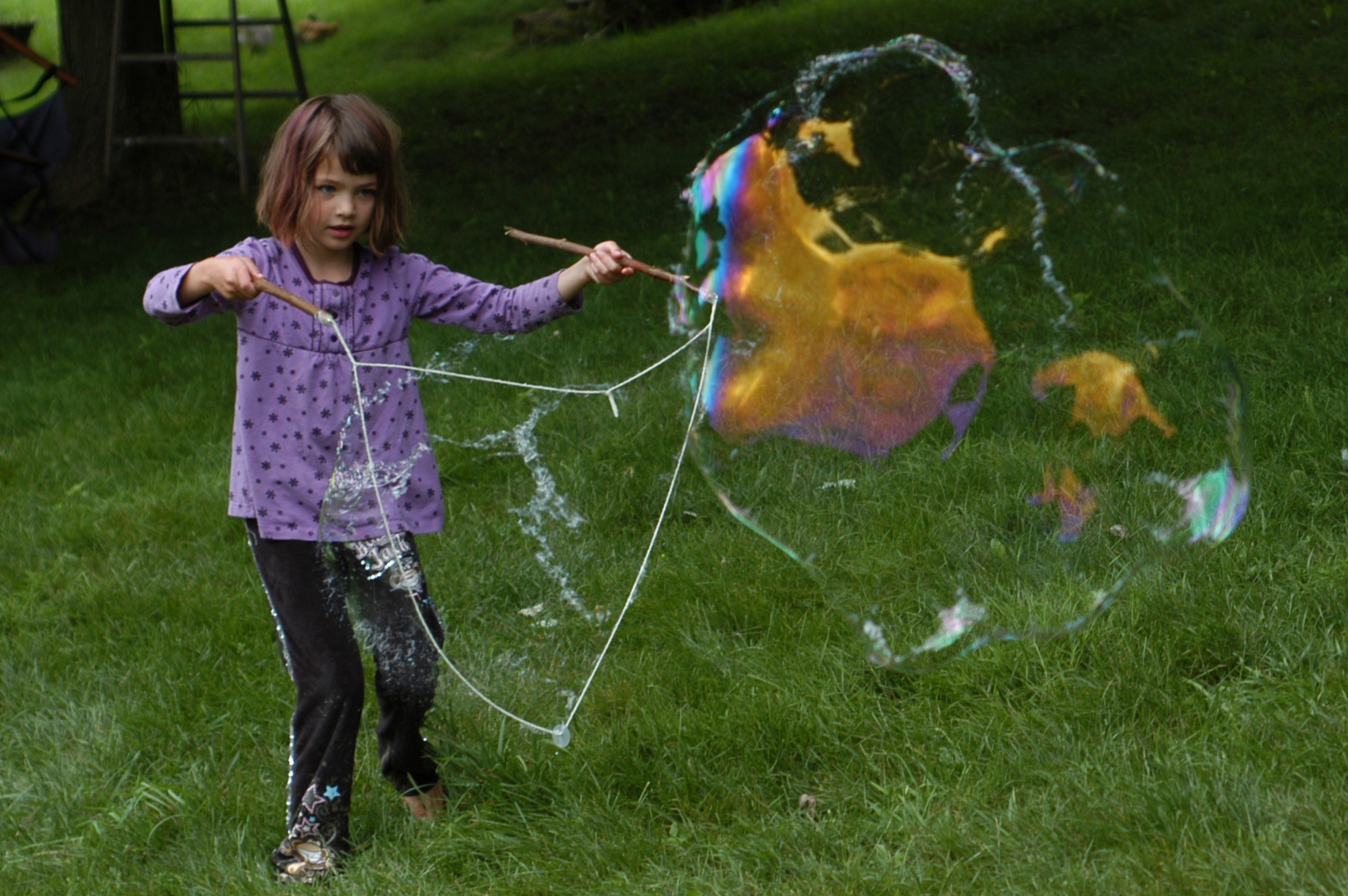
I mixed up a batch of gigantic bubble juice, made some bubble wands with my kids, and got over myself.

I laughed. I played. I watched my kids laugh and play.

In short, I got a much needed attitude adjustment. Because with six to eight foot bubbles floating across my yard – well, I couldn't stay crabby even if I wanted to.

Giant bubble tutorial. [Clean.]

And it didn't cost us a penny. Our supplies list was scavenged up between our basement and our workshop, our kitchen and our brush pile.

Insane, super-sized bubble fun.

And a cure for crabbiness no less.

We ended up making a dozen of the wands in the afternoon to take to our homeschooling potluck. And they were a hit! By the end of the night a full gallon of bubble juice was gone and I think everyone had as much fun as we did making bubbles.

I suggest you stop whatever you had planned for today and do this instead.

Especially if you're grouchy. 

Here's how.

Giant bubble tutorial. [Clean.]

Make Your Wand

All you need are two sticks (any size), two screw eyes (any size – ours were around this big – afflink), a washer or other smooth weight (any size), and some yarn (any kind). See how flexible this is?

You could replace the sticks with purchased dowels but I ask: why uses dowels when you have sticks? Because sticks are free. And they grow in your yard. (Or your neighbors yard…)

Cut two branches, trimming off any side branches or pokie bits. Shoot for around 12" to 24".

In one end of each branch attach a screw eye. (I pre-drilled my holes with a small drill bit to make this easier.)

Cut a length of kitchen twine or yarn (mine was cotton) approximately 6' long and thread through your sticks and your washer. Tie with an overhand knot anywhere you like.

Giant bubble tutorial. [Clean.]

Giant bubble tutorial. [Clean.]

Giant bubble tutorial. [Clean.]

Make some bubbles!

First, make your bubble juice.

I used this recipe. It was fantastic. My favorite recipe yet.

You can also use my more basic recipe if you don't have some of her ingredients, like corn starch or glycerin.

(A note about dish soap: I have tried making bubbles with more natural dish soap to no avail. These babies are Dawn, all the way. We don't use it on our dishes, but for bubbles we keep it on hand.)

Second, dip your string.

Hold the screw-eye and yarn ends of your two sticks together.

Completely submerge the yarn in the bubble juice. (The first dip is the fussiest.)

Lift the wand slowly from the juice, then separate the sticks to open the yarn loop.

Walk slowly backward into the wind and watch your bubbles soar!

You can encourage smaller, (thought still huge!) bubbles to break off and fly free by bringing the yarn loop back together to snip off a bubble here and there.

The bubble below floated clear over our house and was bigger than the biggest watermelon.

Giant bubble tutorial. [Clean.]

Note: if your bubble juice gets frothy on the top from use give it a few minutes to settle down. It works best without foam. Also, one wand in the juice at a time unless you want to spend your time untangling bubble wand strings.

And if you or your kids love to learn about how things work, check out this explanation of bubbles. It was fascinating to my kids.

Enjoy!

Love,
Rachel

P.S. For younger kids the handmade bubble wand tutorial I wrote here is the best. So beautiful and fun.

Free sunhat pattern.

Free sunhat pattern. {Clean. the LuSa Organics Blog}

Free sunhat pattern. {Clean. the LuSa Organics Blog}

Free sunhat pattern. {Clean. the LuSa Organics Blog}

Free sunhat pattern. {Clean. the LuSa Organics Blog}

Free sunhat pattern. {Clean. the LuSa Organics Blog}

Free sunhat pattern. {Clean. the LuSa Organics Blog}

Free sunhat pattern. {Clean. the LuSa Organics Blog}

After a long, dark spring the sun is shining once again.

To celebrate, I sewed a new sunhat for each of my kids last week.

Sage's is identical to the one I made for him when he was seven. (That boy knows what he likes!)

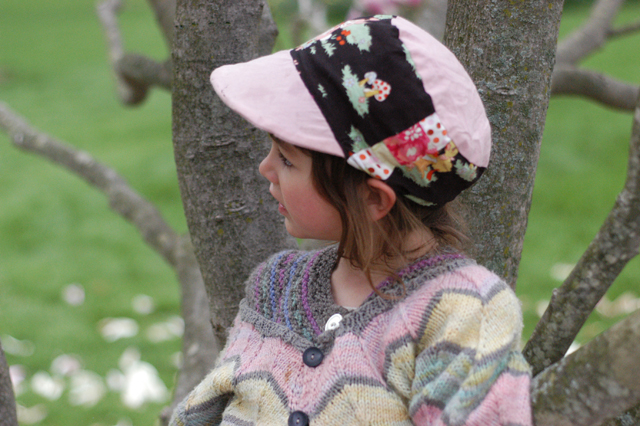
Lupine's is a spunky, patchwork incarnation of the same pattern.

To modify the pattern for Lupine that I originally designed for her brother, I mixed up the colors and added a narrow patchwork strip to the side.

The patchwork is my favorite small detail on this hat. It is a simple addition, but takes the hat to a different level of cuteness. I created it with scraps from her baby sling and several outfits I've sewn for her. It also allowed us to use a favorite but barely too-short fabric for the main hat piece.

She is thrilled with it and proudly announces what each fabric was from when she shows it off.

The hat is reversible and lined in a single print (from another mama-made outfit), so it's two hats in one!

Want to make your own? Of course! The pattern and instructions are below. I've simplified them a bit since I first shared this pattern, including PDF files that should be easier for you to print to scale.

Enjoy!
Rachel

Free sunhat pattern. {Clean. the LuSa Organics Blog}

Summer Sunhat for Girls & Boys

Materials:

  • Pattern – three pieces (below). To print, follow the instructions below. 
  • Outer fabric
  • Lining fabric
  • Timtex or other stiff interfacing for brim (afflink)
  • Matching thread

All sewing was done with a 1/2 inch seam allowance. This is sized for my 6-8 year old. Adjust as needed to fit a younger or older child.

1. Print out pattern pieces.

To print, click on the PDF files below.

Save files to your desktop.

Open and print each file without scaling. (The Sunhat Crown should measure 7 3/8" across.) 

Download SunhatCrown

Download SunhatBrim


2. Cut Fabric.

You will need to cut the following pieces:

Sunhat Band (No pattern piece. Rectangle 21.5" x 4")

Cut two (one lining, one outer fabric). This can be a sold fabric or pieced fabric as shown above.

To add a patchwork band as above, cut your main fabric rectangle 20" long. Sew a 2" wide patchwork band that is 4" tall. Join patchwork and main color and trim to size.

Sunhat Brim

Cut three (two outer fabric, one interfacing.) Note: When you cut out your paper pattern fold and cut so you have the entire 1/2 moon. I only copied down 1/2 of the pattern to make it fit on a single sheet.


Sunhat Crown

Cut two (one lining, one outer fabric)


3. Sew Brim

Cut interfacing brim down by 1/2 inch on all sides.

Sew outer curved edge of brim, right sides together.

Turn and press.

Insert interfacing and trim if needed to fit smoothly inside.

Top stitch outer curve through all layers to hold interfacing in place.

Sew Crown

Fold hat band so that the short ends line up (right sides together), creating a flattened cylinder. Sew.

Pin cylinder shape carefully to hat top (also right sides together). Sew.

Turn right side out and press.

Repeat with lining.

Pin brim to hat, centered opposite of back seam with top side of brim flat against front of hat (it will look like someone flipped the brim up, 1980's grade school style). If you added a patchwork detail, align this with the edge of the brim or however you like it best.

Sew into place and flip down. It should be starting to look like a hat now!

Press under 1/2" on bottom edge of hat and hat lining.

Insert hat lining into outer fabric hat and top stitch together very close to the edge.

You did it! Bravo, friend.

Spring craft round-up.

It's a snow day! It's snowing like crazy and our day's outings and lessons in town are cancelled.

Hm. So much for those warm days and cold nights! Well, if you're in the same storm-belt (or just want some simple kid crafts to do together), I've rounded up some tutorials to inspire you today! Many are from my own work, a few are from elsewhere, and all are big fun.

Enjoy!

Spring craft round-up. | Clean. : : the LuSa Organics Blog

Kid Art Stencils

Turn your little's art into your favorite T.

Spring craft round-up. | Clean. : : the LuSa Organics Blog

Painted Rocks (By ISabelle Hessedjian)

While I can't find her tutorial (and her site is not in english), these are worth staring at. And making.

Spring craft round-up. | Clean. : : the LuSa Organics Blog

Homemade Play Dough

Substitute white rice flour for wheat and your dough can be gluten-free!

Seed

Plant Magic (By Misty Horizon)

Plant a seed and watch it grow.

Spring craft round-up. | Clean. : : the LuSa Organics Blog

Fabric Bunting

More work for the adults than the kids, but a still a fun project to do together.

Spring craft round-up. | Clean. : : the LuSa Organics Blog

Wool felt Easter Eggs

These are addictive. Replace those plastic eggs with quick, simple felt eggs!

Blocks

Painted Blocks (By LMNOP Blog)

Check out this simple fun project!

Spring craft round-up. | Clean. : : the LuSa Organics Blog

Date Balls

One word: Yum.

Spring craft round-up. | Clean. : : the LuSa Organics Blog

Fabric covered Tins (by Green Bee)

Make a treasure box

Spring craft round-up. | Clean. : : the LuSa Organics Blog

Beeswax Luminaries

Gorgeous, simple, magical.

Stamp

Carve a Stamp (By Ishtar Olivera)

Simple fun for kids old enough to wield a knife.

Spring craft round-up. | Clean. : : the LuSa Organics Blog

Sew a Crown

A sweet, simple, free-form play crown.

Book

Handmade Book (by Bird and Little Bird)

Craft a tiny book for tiny hands.

Spring craft round-up. | Clean. : : the LuSa Organics Blog

Felted Soap

All you need is soap and some wool.

Spring craft round-up. | Clean. : : the LuSa Organics Blog

Paint Peg People

(Really now. You knew I'd throw that in, didn't you?)

Spring craft round-up. | Clean. : : the LuSa Organics Blog

Homemade Butter

If you have heavy cream and a blender (or a jar and a couple of marbles) you can make butter!

Spring craft round-up. | Clean. : : the LuSa Organics Blog

Make a Naked Egg (By Imagination Station Toledo)

Dissolve the shell off of a chicken egg.

Spring craft round-up. | Clean. : : the LuSa Organics Blog

Matchbox Babies

We love these.

And with that, I'm off to craft with my kids. Have a wonderful day, whatever the weather in your world!

Love,
Rachel